
Hear from Our Customers
You’re not looking for a science project. You need to know if there’s mold, where it is, and what type you’re dealing with. That’s what professional mold testing does—it gives you actual answers instead of guessing games.
Here’s what changes when you know for sure. You stop wondering if that musty smell is just old carpet or something worse. You get documentation that insurance companies recognize if you need to file a claim. You protect your home’s value—because half of potential buyers walk away from properties with mold issues, and affected homes can lose 20-37% of their value.
The testing process uses calibrated equipment and lab analysis to measure mold concentrations in your air and on surfaces. We compare those levels to what’s normal outside your home. If the numbers inside are higher, you’ve got a problem. If they’re not, you’ve got peace of mind.
Most importantly, you catch problems early. Mold remediation averages $3,500 when you wait. Testing costs a fraction of that and often prevents the bigger expense entirely.
We work throughout Bucks County and the surrounding areas, including right here in Belardy. We know the housing stock in this neighborhood—a lot of homes built between 1940 and 1969, which means older construction methods and materials that hold moisture differently than newer builds.
That matters because mold grows where water sits. Older homes in Belardy often have basements that weren’t waterproofed to modern standards, crawl spaces with poor ventilation, and bathroom exhaust systems that don’t actually vent outside. We’ve tested hundreds of homes with these exact issues.
When you call us at 215-431-4744, you’re getting a team that understands local conditions—the humidity patterns, the common problem areas in homes your age, and what actually works to fix them. We’re not reading from a script. We’re telling you what we’ve seen in homes just like yours.
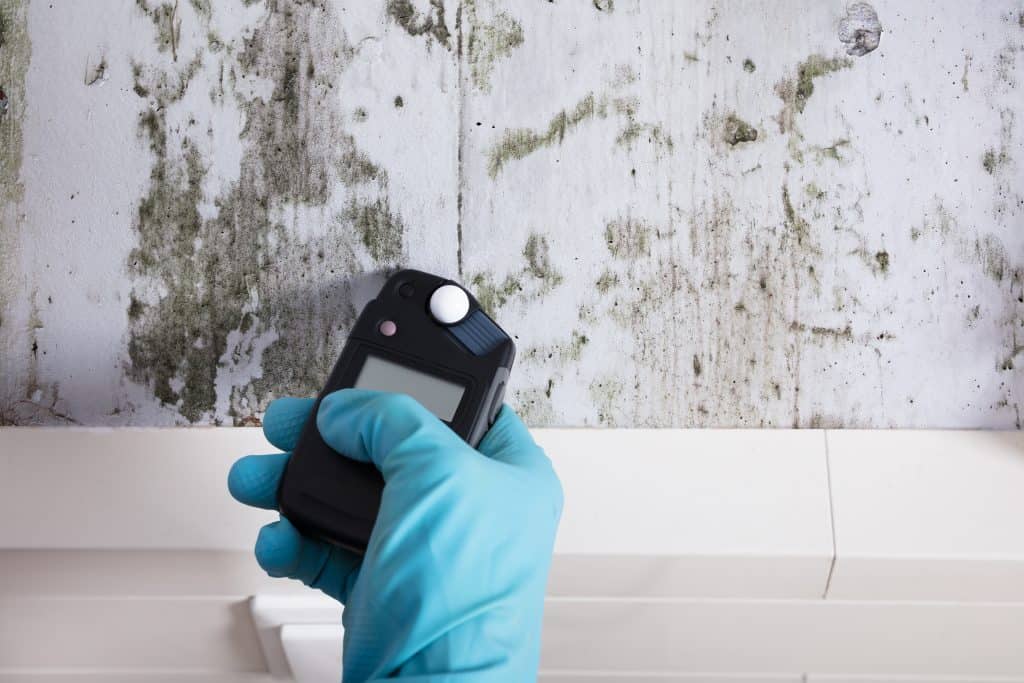
First, we walk through your home and look for visible signs—water stains, discoloration, areas that feel damp. We use moisture meters to check walls, floors, and ceilings for hidden water. High moisture readings tell us where mold is likely growing even if you can’t see it yet.
Next, we collect air samples from different rooms and one sample from outside. The outdoor sample is your baseline—it shows what’s normal for your area. We also take surface samples from any suspicious spots using swabs or tape lifts. These samples go to a certified lab that identifies the specific mold species and measures the concentration.
Results come back in 3-5 business days. The lab report shows you exactly what types of mold are present, how much, and whether the levels are elevated compared to outdoor air. We review the results with you and explain what they mean in plain language—no jargon, no upselling.
If you need remediation, we give you a detailed plan. If you don’t, we tell you that too. Either way, you have documentation that satisfies insurance requirements, real estate transactions, or just your own need to know what’s happening in your home.
Ready to get started?
You get a full home assessment that includes visual inspection, moisture mapping, and thermal imaging to find hidden water issues. We test both air quality and surface samples because mold doesn’t always release spores into the air—sometimes it’s growing quietly behind a wall or under flooring.
The lab analysis identifies specific mold species. That matters because not all mold is the same. Some types are more aggressive, some indicate serious water damage, and some are relatively harmless. Black mold gets all the attention, but there are 50-100 different molds commonly found in water-damaged buildings. You need to know which ones you’re dealing with.
In Belardy specifically, we see elevated mold levels most often in basements and bathrooms. The humid climate here creates perfect conditions—especially during summer months when indoor AC meets outdoor humidity. Homes in this area also tend to have older HVAC systems that don’t dehumidify as effectively as newer equipment. We account for these local factors when we interpret your results.
You also get a written report suitable for insurance claims, real estate disclosures, or legal documentation. Most insurance policies cover mold testing when it’s related to a covered event like a pipe burst or storm damage. The report we provide meets those documentation requirements.
DIY mold test kits are basically useless for making real decisions. They use petri dishes that grow mold from air samples, but here’s the problem—mold is everywhere. Every home has some mold spores in the air. Those petri dishes will grow mold whether you have a problem or not, and the growth looks the same regardless of concentration.
Professional testing measures concentration levels and compares them to outdoor air. That’s the critical difference. If your indoor levels are significantly higher than outdoor levels, you have active mold growth inside. If they’re similar, you’re probably fine. DIY kits can’t tell you that.
Professional tests also identify specific species. Some molds indicate serious water damage. Others are common and relatively harmless. A lab analysis tells you which you’re dealing with. A DIY kit just tells you “mold detected”—which is about as helpful as a test that says “air detected.”
Most homeowners insurance policies cover mold testing and remediation if the mold resulted from a covered peril—like a burst pipe, storm damage, or appliance malfunction. The key word is “sudden.” If a pipe bursts and causes water damage that leads to mold, that’s typically covered. If mold grew slowly over time due to poor ventilation or maintenance issues, that’s usually not covered.
Coverage limits for mold are often capped between $1,000 and $10,000, even when the cause is covered. Some policies exclude mold entirely unless you purchase additional coverage. You need to check your specific policy.
Professional testing helps your claim in two ways. First, it documents the extent of the problem with objective data. Second, it can sometimes identify whether the mold resulted from a sudden event or long-term conditions. Insurance adjusters take lab reports seriously. They don’t take your word for it. Having professional documentation significantly improves your chances of coverage.
The obvious sign is visible mold growth—dark spots on walls, fuzzy growth in corners, discoloration on ceilings. But you don’t always see it before it becomes a problem. Musty odors are a strong indicator, especially in basements, bathrooms, or areas that stay damp.
Health symptoms are another red flag. If you or your family experience unexplained respiratory issues, eye irritation, persistent coughing, or allergy-like symptoms that improve when you leave the house, mold could be the cause. The Institute of Medicine found sufficient evidence linking indoor mold exposure to respiratory symptoms and asthma exacerbation.
Water damage is the biggest predictor. If you’ve had any flooding, leaks, pipe bursts, or even persistent condensation, you should test. Mold starts growing on wet materials within 24-48 hours. Even if you dried everything quickly, mold can establish itself in hidden areas—inside walls, under flooring, in HVAC ducts. In Belardy’s older homes, we routinely find mold in crawl spaces and basements that homeowners didn’t know existed because the moisture problem was hidden.
The actual testing appointment takes about two hours for an average-sized home. We spend time doing a thorough visual inspection, checking moisture levels throughout the house, and collecting air and surface samples from multiple locations. Larger homes or properties with extensive suspected mold may take longer.
Lab results typically come back in 3-5 business days. The lab needs time to culture the samples and identify specific mold species under microscopy. Some labs offer rush processing for an additional fee if you’re in a time-sensitive situation—like a real estate closing or insurance deadline.
Once we receive the lab report, we schedule a follow-up call or meeting to review the findings with you. We explain what the numbers mean, which mold types were found, whether the concentrations are elevated, and what your options are. If remediation is needed, we provide a detailed plan and cost estimate. If the results show normal levels, we discuss prevention strategies to keep it that way. The entire process from initial testing to having a clear action plan usually takes about a week.
Air testing can detect elevated mold spore levels that suggest hidden growth, but it can’t pinpoint the exact location behind a wall. That’s where moisture meters and thermal imaging come in. These tools let us identify areas with elevated moisture content or temperature differences that indicate water intrusion—which is where hidden mold grows.
If moisture readings are high in a specific wall section, we know there’s likely mold growth even if we can’t see it. In some cases, we’ll recommend a small inspection hole to visually confirm before tearing into a larger area. This targeted approach saves you money compared to opening up entire walls on speculation.
Surface testing can also help when we find suspicious stains or discoloration on walls. We can test those spots to confirm whether it’s mold or just dirt, water stains, or other discoloration. In Belardy’s older homes, we frequently find hidden mold in exterior walls where insulation is poor and condensation forms, in bathroom walls behind tile where old grout has failed, and in basement rim joists where humidity is consistently high. Professional testing combines multiple methods to find problems you can’t see with your eyes alone.
First, don’t panic. Finding mold is actually better than not knowing it’s there. Now you can address it before it causes more damage or affects your health further. The lab report tells us what species are present and the concentration levels, which determines the scope of remediation needed.
We provide a detailed remediation plan that outlines the affected areas, the removal process, and the timeline. Depending on the extent, remediation can range from $1,500 to $9,000, with the average around $3,500. Small, contained areas cost less. Extensive growth affecting multiple rooms or structural materials costs more. We give you an honest assessment—not an inflated worst-case scenario.
The remediation process involves containing the affected area to prevent spores from spreading, removing contaminated materials, treating surfaces with antimicrobial solutions, and fixing the underlying moisture problem. That last part is critical. If you don’t fix why the mold grew in the first place, it will come back. We identify the moisture source—whether it’s a leak, poor ventilation, humidity issues, or drainage problems—and address it as part of the solution. After remediation, we can do post-testing to confirm the mold is gone and levels have returned to normal.
Other Services we provide in Belardy